

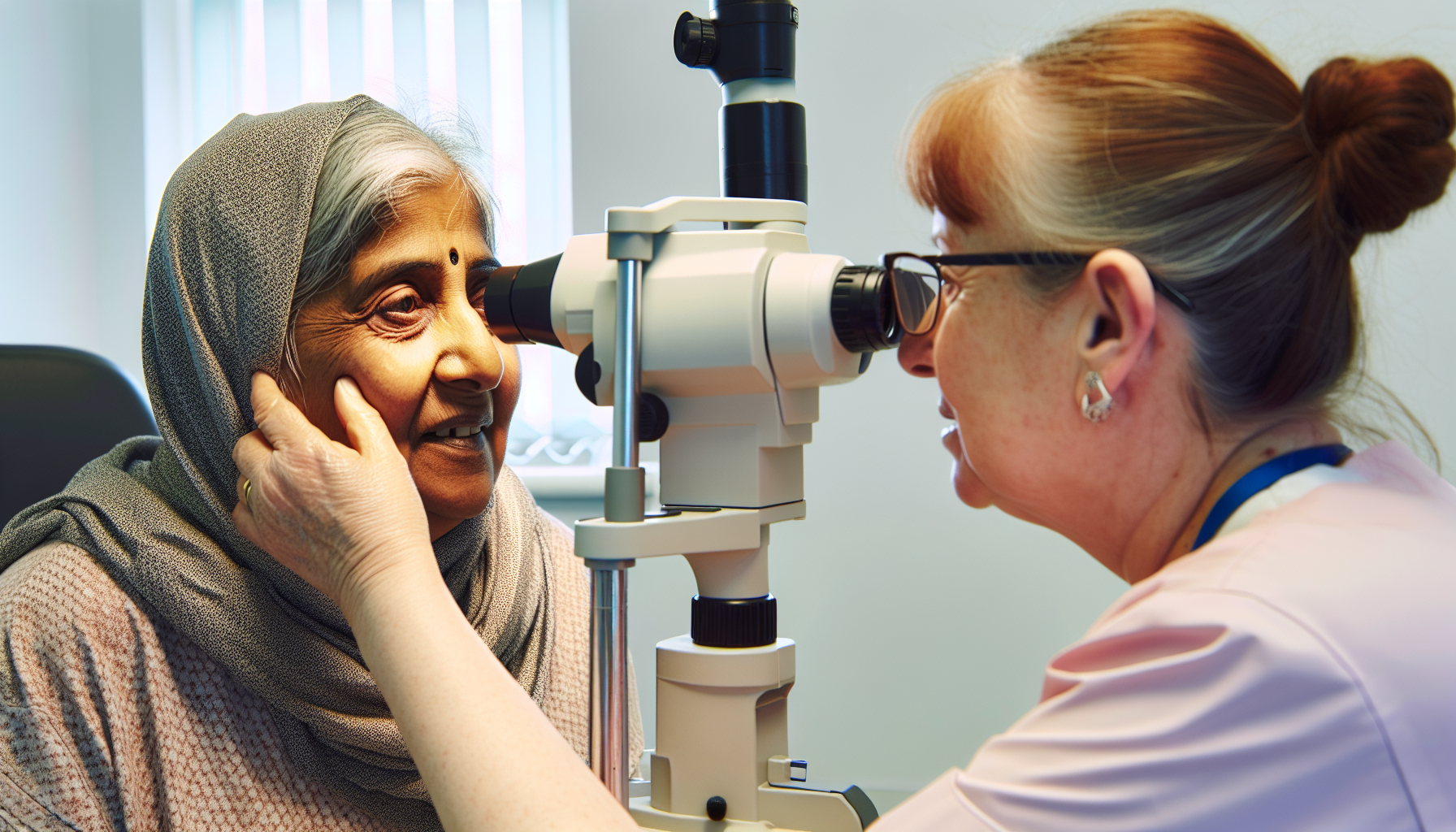
“Can I have cataract surgery if I also have glaucoma? Should I combine it with a pressure‑lowering procedure—and is it safe?” These are among the most common questions patients from Bristol, Bath, Weston‑super‑Mare, and Clevedon ask in clinic. Here’s how Mr Jesse Panthagani, Consultant Ophthalmologist, approaches it—plain English, practical choices, and a plan focused on your vision, independence, and safety.
Quick Answer
Yes—cataract surgery can be safely performed when you have glaucoma, and in many cases it’s an opportunity to lower eye pressure at the same time. We may combine cataract removal with a small glaucoma procedure (often a minimally invasive stent) to reduce drops and protect the optic nerve. The choice depends on your glaucoma type and severity, your current pressure and medications, and your goals for driving, reading, and daily life.
What actually is glaucoma—and why does it matter for cataract surgery?
- Glaucoma is damage to the optic nerve (the “cable” that carries vision to the brain), usually related to pressure inside the eye being too high for that nerve.
- Cataract is the clouding of your natural lens, causing glare, blur, and faded colours.
Why it matters:
- The optic nerve in glaucoma is more sensitive. We must keep pressure steady during and after surgery.
- Cataract surgery can slightly lower pressure on its own. In some eyes, combining procedures helps achieve safer, more reliable control.
- Your current vision and visual field (the edges of what you see) set realistic expectations for outcomes.
Does cataract surgery lower eye pressure by itself?
Often, yes—cataract surgery can produce a small but meaningful pressure drop by improving fluid outflow in the eye. This is especially true in “narrow” or “angle‑closure” eyes, where the lens is crowding the drain.
However:
- The pressure‑lowering effect varies and may not be enough if you have moderate or advanced glaucoma.
- If you take several drops or your target pressure is quite low, we’ll usually discuss a combined approach.
When do we consider combining procedures?
We’re likely to recommend combining cataract surgery with a pressure‑lowering step if you have:
- Moderate to advanced glaucoma needing lower target pressure
- Pressure that’s high despite one or more drops
- Pressure fluctuations or steroid responses after past procedures
- Narrow angles (or angle‑closure) where lens removal helps but extra pressure control is wise
- A desire to reduce reliance on drops, if safe to do so
What are the combined options?
We tailor the plan to your eye. In a private setting serving Bristol, Bath, Portishead, and Frome, the most common options are:
Minimally invasive glaucoma surgery (MIGS): “MIGS” is an umbrella term for tiny internal procedures that enhance the eye’s natural drain with minimal trauma.
- Stents (for example, micro‑stents placed at the drain): create a micro‑bypass to help fluid exit more easily.
- Canal procedures (gentle “unclogging” of the drain): reshape or clear the drainage canal to improve flow.
- Pros: Add only a few minutes to cataract surgery, fast recovery, low risk profile.
- Considerations: Pressure reduction is modest; best for mild to moderate glaucoma or as a drop‑sparing step.
Trabeculectomy: A time‑tested procedure creating a new drainage route under the eyelid.
- Pros: Can achieve lower pressures than MIGS; suitable for more advanced disease.
- Considerations: More intensive aftercare; higher risk of temporary blurred vision and pressure fluctuations.
Drainage tube (glaucoma implant): A small tube that diverts fluid to a reservoir plate.
- Pros: Useful when other options have failed or target pressure is very low.
- Considerations: More complex surgery and follow‑up.
We’ll discuss the least invasive option that meets your pressure target and lifestyle goals. Not everyone needs a combined procedure—some do very well with cataract surgery alone.
How is the operation done—and how long does it take?
- Cataract removal uses phacoemulsification: a tiny ultrasound probe softens and removes the cloudy lens through a keyhole incision.
- A clear intraocular lens (IOL) is then inserted to replace your natural lens.
- Anaesthetic is usually numbing drops and a small local injection; you’re awake but comfortable. Light sedation is available if needed.
- Time in theatre: typically 10–20 minutes for cataract; adding MIGS often takes just a few extra minutes. Trabeculectomy or a tube implant takes longer.
- Home the same day. Most people notice clearer, brighter vision within a few days, with pressure checks arranged to keep you safe.
Which lens should I choose if I have glaucoma?
Cataract surgery replaces your cloudy lens with an IOL (intraocular lens). Options include:
Monofocal IOL: Clear focus at one distance (usually far). You’ll likely need glasses for reading.
- Often preferred in glaucoma for the best contrast and predictability.
Toric IOL: A monofocal lens that also corrects astigmatism (an oval shape to the eye that causes blur).
- Can sharpen distance vision and reduce spectacle strength for driving.
EDOF IOL (Extended Depth of Focus): Spreads focus over a range, aiming for good distance and arm’s‑length tasks (dashboards, computer). Reading glasses may still be needed for fine print.
Multifocal IOL: Splits light for distance and near to reduce glasses use.
- In glaucoma, we use these cautiously. They can reduce contrast and may not suit eyes with moderate to advanced nerve damage.
Other strategies:
- Monovision (one eye set for distance, the other slightly nearer) can reduce glasses reliance; we assess carefully to ensure you’ll be comfortable.
We’ll match your lens choice to the level of glaucoma, your visual field, and what matters to you—driving confidence, screen work, reading, or hobbies.
Is it safe to combine cataract and glaucoma surgery?
With careful planning, yes. Steps we take to keep you safe:
- Personalised pressure target: set before surgery and reviewed after.
- Gentle technique: modern phacoemulsification and MIGS are tissue‑sparing.
- Pressure checks: within the first week to catch and treat any pressure spikes.
- Drop plan: we never ask you to stop glaucoma drops unless advised; we taper only when safe.
- Anti‑inflammatory drops tailored to you, especially if you’ve had steroid pressure rises before.
- Honest expectations: if glaucoma is advanced, cataract removal improves clarity and glare but won’t restore lost visual field. Our goal is safer pressure and the clearest vision your nerve allows.
What will recovery look like?
- Most people see an improvement within 24–72 hours; the eye settles over 2–4 weeks.
- You’ll use drops for 3–6 weeks; after combined procedures, the regimen may be slightly different.
- Back to normal gentle activities quickly; avoid heavy lifting and swimming for around 2 weeks.
- Driving: once legal vision is met and you feel confident—often within a few days—subject to your post‑op check.
- We provide direct contact details for any concerns and clear written instructions.
Seek urgent advice if you notice increasing pain, sudden drop in vision, or a red, sticky eye that worsens—these are uncommon but important to report.
Will I be able to stop my glaucoma drops?
Maybe. Many patients reduce the number of drops after a combined procedure, and some stop entirely—but it’s not guaranteed. Think of combined surgery as aiming for safer, steadier pressure with fewer medications where possible. Glaucoma still needs lifelong monitoring, even with excellent pressure control.
How does private care compare with the NHS?
Both routes are safe and effective. The differences are mainly around choice and timing:
- Private care often offers a wider menu of combined options (various MIGS devices) and premium IOLs (toric, EDOF, selected multifocals), with shorter waiting times.
- NHS pathways prioritise medical need; combined options and lens choices can be more limited, and waits may be longer in some areas.
- We’re happy to share results with your NHS optometrist or GP and keep care coordinated.
Who is a good candidate for Cataract Surgery When You Have Glaucoma: Combined Procedures and Safer Pressure Control?
You might benefit if you:
- Have glare, haloes, or foggy vision affecting driving or reading
- Need lower eye pressure or are on multiple drops
- Have narrow angles or pressure spikes
- Want to reduce reliance on drops if safe
- Prefer a quicker path to surgery with choice of lens and procedure
Suitability is individual—please book a consultation for tailored advice. We’ll check the optic nerve, pressure, corneal health, and visual field, then discuss options in clear, simple terms.
Common questions I hear in Bristol, Bath, and Weston‑super‑Mare
- Will it hurt? No. You’ll feel gentle pressure and bright lights, but not pain. Sedation is available if you’re anxious.
- How long am I in the hospital? Usually a morning or afternoon. The procedure itself takes 10–20 minutes; combined MIGS adds only a little time.
- What if I only have glaucoma in one eye? We plan each eye individually; sometimes cataract alone is best, sometimes a combined approach helps.
- Can I choose a toric or EDOF lens if I have glaucoma? Often, yes—especially in mild to moderate disease. We’ll explain benefits and trade‑offs for your specific eye.
- What are the risks? Infection and serious complications are rare. Short‑term pressure spikes, inflammation, or blurred vision can occur; we monitor closely to keep you safe.
Why choose Mr Jesse Panthagani?
- Consultant‑led care from first chat to final check
- Clear explanations, no jargon, honest advice
- Full range of cataract lenses and combined glaucoma options, close to home in Bristol, Bath, Clevedon, Portishead, and surrounding areas
- A calm, friendly team focused on what matters to you—driving, reading, and independence
Ready to explore your options?
Book a free video assessment to discuss Cataract Surgery When You Have Glaucoma: Combined Procedures and Safer Pressure Control. Self‑refer—no GP letter needed.
- Free consultation (video)
- Clear explanation and personalised plan
- Honest advice on lenses, MIGS, and pressure control
📞 Call 07300 61 71 71
👉 Book online: https://jessepanthagani.co.uk/book-online
We look forward to helping you see clearly and protect your vision—safely and simply. This article is general information only; for personalised guidance, please book a consultation.